Search This Blog

Wednesday, August 30, 2006

The Other Israel, by Ted Pike

This video reveals:
Corruption of the original teachings of Moses by the Pharisees and wicked Rabbis.
Infiltration of Kabbalah into Judaism.
How Jesus came to purify Judaism and Torah from filth of Talmud and other Rabbinical innovations.
The Antichrist and how Israel was established to prepare for the Antichrist, not Jesus Christ.
Jewish liberals as pioneers of the feminist movement.
Atheistic Jews as pioneers of Communism and Capitalism.
How Hollywood, the American Congress and TV stations are being dominated by the Zionists.
Israel is moving towards the Antichrist.

It is really an eye opener.

Ted Pike is a well known anti-Zionist Christian and has been calling the fellow Christian brethren towards the truth away from Zionism and establishments that support the Zionists.

Please visit The Other Israel.

The Prophet, Muhammad warning about The Antichrist, by Ahmad Mokhzani Abdullah


The Last Messenger to Humanity did warn about The Beast of the Bible who will emerge and terrorize and conquer every city except Makkah and Madinah. The False Messiah (Arabic 'Al-Masih Ad-Dajjal') according to the Prophet will appear as a young person with deformed physical characteristics; he will be blind on his right eye and his left eye which he sees with will be shining green.

And apart from appearing between Syria and Iraq and making his appearance known in Isfahan, he will have a large following of the Jews (Zionists?), women (feminists?), illegitimate children and the Bedouins (according to Wikipedia, the Shiites of today are religious descendants of Bedouin Kharijites who had infiltrated Shiism after death of Ali) and will bring his own religion, with him as the Deity.

Here, we have compiled authentic narrations from Sahih Muslim, the third most authentic source of Islamic Religion regarding the Prophet's predictions of the future, in particular the coming of the one-eyed Antichrist.

We urge Humanity, from any religions and backgrounds to take heed of the predictions of the Prophet, as we may sometimes take heed of later Prophecy figures like Nostradamus. We will see that so many of these prophecies had come into being, indeed the Prophet did not speak from his own desires. A few coincide with what Nostradamus had prophesied.

*'Allah' is the Arabic for God

PERTAINING TO THE CONQUEST OF CONSTANTINOPLE AND THE APPEARANCE OF THE ANTICHRIST AND DESCENT OF JESUS SON OF MARY (JESUS CHRIST)

Book 041, Number 6924:
Abu Huraira reported Allah's Messenger (may peace be upon him) as saying: The Last Hour would not come until the Romans would land at al-A'maq or in Dabiq. An army consisting of the best (soldiers) of the people of the earth at that time will come from Medina (to counteract them). When they will arrange themselves in ranks, the Romans would say: Do not stand between us and those (Muslims) who took prisoners from amongst us. Let us fight with them; and the Muslims would say: Nay, by Allah, we would never get aside from you and from our brethren that you may fight them. They will then fight and a third (part) of the army would run away, whom Allah will never forgive. A third (part of the army). which would be constituted of excellent martyrs in Allah's eye, would be killed ani the third who would never be put to trial would win and they would be conquerors of Constantinople. And as they would be busy in distributing the spoils of war (amongst themselves) after hanging their swords by the olive trees, the Satan would cry: The Antichrist has taken your place among your family. They would then come out, but it would be of no avail. And when they would come to Syria, he would come out while they would be still preparing themselves for battle drawing up the ranks. Certainly, the time of prayer shall come and then Jesus (peace be upon him) son of Mary would descend and would lead them in prayer. When the enemy of Allah (the Antichrist) would see him, it would (disappear) just as the salt dissolves itself in water and if he (Jesus) were not to confront him at all, even then it would dissolve completely, but Allah would kill him by his hand and he would show them his blood on his lance (the lance of Jesus Christ).

THERE WOULD BE MUCH BLOODSHED AMONG ROMANS AT THE TIME OF THE APPEARANCE OF THE ANTICHRIST

Book 041, Number 6927:
Yusair b. Jabir reported: Once there blew a red storm in Kufah that there came a person who had nothing to say but (these words): Abdullah b. Mas'ud, the Last Hour has come. He ('Abdullah b. Mas'ud) was sitting reclining against something, and he said: The Last Hour would not come until the people divide in- heritance and rejoice over booty, and then said pointing towards Syria, with the gesture of his hand like this: The enemy shall muster strength against Muslims and the Muslims will muster strength against them (Syrians). I said: You mean Rome? And he said: Yes, and there would be a terrible fight and the Muslims would prepare a detachment (for fighting unto death) which would not return but victorious. They will fight until night will intervene them; both the sides will return without being victorious and both will be wiped out. The Muslims will again prepare a detachment for fighting unto death so that they may not return but victorious. When it would be the fourth day, a new detachment out of the remnant of the Muslims would be prepared and Allah will decree that the enemy should be routed. And they would fight such a fight the like of which would not be seen, so much so that even if a bird were to pass their flanks, it would fall down dead before reaching the end of them. (There would be such a largescale massacre) that when counting would be done, (only) one out of a hundred men related to one another would be found alive. So what can be the joy at the spoils of such war and what inheritance would be divided! They would be in this very state that they would hear of a calamity more horrible than this. And a cry would reach them: The Antichrist has taken your place among your off-spring. They will, therefore, throw away what would be in their hands and go forward sending ten horsemen, as a scouting party. Allah's Messenger (may peace be upon him) said: I know their names and the names of their forefathers and the colour of their horses. They will be best horsemen on the surface of the earth on that day or amongst the best horsemen on the surface of the earth on that day.

THE CONQUESTS OF THE MUSLIMS BEFORE THE APPEARANCE OF THE ANTICHRIST

Book 041, Number 6930:
Nafi' b. Utba reported: We were with Allah's Messenger (may peace be upon him) in an expedition that there came a people to Allah's Apostle (may peace be upon him) from the direction of the west. They were dressed in woollen clothes and they stood near a hillock and they met him as Allah's Messenger (may peace be upon him) was sitting. I said to myself: Better go to them and stand between him and them that they may not attack him. Then I thought that perhaps there had been going on secret negotiation amongst them. I however, went to them and stood between them and him and I remember four of the words (on that occasion) which I repeat (on the fingers of my hand) that he (Allah's Messenger) said: You will attack Arabia and Allah will enable you to conquer it, then you would attack Persia and He would make you to Conquer it. Then you would attack Rome and Allah will enable you to conquer it, then you would attack the Antichrist and Allah will enable you to conquer him. Nafi' said: Jabir, we thought that the Antichrist would appear after Rome (Syrian territory) would be conquered.

ACCOUNT OF THE ANTICHRIST AND HIS FEATURES AND WHAT WOULD BE ALONG WITH HIM

Book 041, Number 7005:
Ibn Umar reported that Allah's Messenger (may peace be upon him). made a mention of the Antichrist in the presence of the people and said: Allah is not one-eyed and behold that the Antichrist is blind on the right eye and his eye would be like a floating grape.
Book 041, Number 7006:
This hadith has been narrated on the authority of Ibn 'Umar through another chain of transmitters.
Book 041, Number 7007:
Anas b. Malik reported that Allah's Messenger (may peace be upon him) said: There is never a prophet who has not warned the Ummah of that one-eyed liar; behold he is one-eyed and your Lord is not one-eyed. On his forehead are the letters k f. r. (Kafir).
Book 041, Number 7008:
Anas b. Malik reported that Allah's Messenger (may peace be upon him) said: There would be written three letters k. f. r., i. e. Kafir, between the eyes of the Antichrist.
Book 041, Number 7009:
Anas b. Malik reported that Allah's Messenger (may peace be upon him) said: The Antichrist is blind of one eye and there is written between his eyes the word "Kafir". He then spelled the word as k. f. r., which every Muslim would be able to read.
Book 041, Number 7010:
Hudhalfa reported that Allah's Messenger (may peace be upon him) said: The Antichrist is blind of left eye with thick hair and there would be a garden and fire with him and his fire would be a garden and his garden would be fire.
Book 041, Number 7011:
Hudhaifa reported Allah's Messenger (may peace be upon him) as saying: the Antichrist would have with him water and fire and his fire would bays the effect of cold water and his water would have the effect of fire, so don't put yourself to ruin. Abu Mas'ud reported: I also heard it from Allah's Messenger (may peace be upon him).
Book 041, Number 7012:
'Uqba b. 'Amr Abu Mas'ud al-Ansari reported: I went to Hudhaifa b. Yaman and said to him: Narrate what you have heard from Allah's Messenger (may peace be upon him) pertaining to the Antichrist. He said that the Antichrist would appear and there would be along with him water ant fire and what the people would see as water that would be fire and that would burn and what would appear as fire that would be water and any one of you who would see that should plunge in that which he sees as fire for it would be sweet, pure water, and 'Uqba said: I also heard it, testifying Hudhaifa.
Book 041, Number 7013:
Hudhaifa and Ibn Mas'ud met together. Hudhaifa said: I know more than you as to what there would be along with the Antichrist. There would be along with him two canals (one flowing with water) and the other one (having) fire (within it), and what you would see as fire would be water and what you would see as water would be fire. So he who amongst you is able to see that and is desirous of water should drink out of that which he sees as fire.
Book 041, Number 7014:
Abu Huraira reported Allah's Messenger (may peace be upon him) as saying: May I not inform you about the Antichrist what no Apostle of Allah narrated to his people? He would be blind and he would bring along with him an Image of Paradise and Hell-Fire and what he would call as Paradise that would be Hell-Fire and I warn you as Noah warned his people.
Book 041, Number 7015:
An-Nawwas b. Sam'an reported that Allah's Messenger (may peace be upon him) made a mention of the Antichrist one day in the morning. He sometimes described him to be insignificant and sometimes described (his turmoil) as very significant rand we felt) as if he were in the cluster of the date-palm trees. When we went to him (to the Holy Prophet) in the evening and he read (the signs of fear) in our faces, he said: What is the matter with you? We said: Allah's Messenger, you made a mention of the Antichrist in the morning (sometimes describing him) to be insignificant and sometimes very important, until we began to think as if he were present in some (near) part of the cluster of the date palm trees. Thereupon he said: I harbour fear in regard to you in so many other things besides the Antichrist. If he comes forth while I am among on, I shall contend with him on your behalf, but if he comes forth while I am not amongst you, a man must contend on his own behalf and Allah would take care of every Muslim on my behalf (and safeguard him against his evil). He (Antichrist) would be a young man with twisted, contracted hair, and a blind eye. I compare him to 'Abd-ul-'Uzza b. Qatan. He who amongst you would survive to see him should recite over him the opening verses of Sura Kahf (xviii.). He would appear on the way between Syria and Iraq and would spread mischief right and left. O servant of Allah! adhere (to the path of Truth). We said: Allah's Messenger, how long would he stay on the earth? He said.. For forty days, one day like a year and one day like a month and one day like a week and the rest of the days would be like your days. We said: Allah's Messenger, would one day's prayer suffice for the prayers of day equal to one year? Thereupon he said: No, but you must make an estimate of time (and then observe prayer). We said: Allah's Messenger, how quickly would he walk upon the earth? Thereupon he said: Like cloud driven by the wind. He would come to the people and invite them (to a wrong religion) and they would affirm their faith in him and respond to him. He would then give command to the sky and there would be rainfall upon the earth and it would grow crops. Then in the evening, their posturing animals would come to them with their humps very high and their udders full of milk and their flanks stretched. He would then come to another people and invite them. But they would reject him and he would go away from them and there would be drought for them and nothing would be lef t with them in the form of wealth.
He would then walk through the waste, land and say to it: Bring forth your treasures, and the treasures would come out and collect (themselves) before him like the swarm of bees. He would then call a person brimming with youth and strike him with the sword and cut him into two pieces and (make these pieces lie at a distance which is generally) between the archer and his target. He would then call (that young man) and he will come forward laughing with his face gleaming (with happiness) and it would at this very time that Allah would send Christ, son of Mary, and he will descend at the white minaret in the eastern side of Damascus wearing two garments lightly dyed with saffron and placing his hands on the wings of two Angels. When he would lower his head, there would fall beads of perspiration from his head, and when he would raise it up, beads like pearls would scatter from it. Every non-believer who would smell the odour of his self would die and his breath would reach as far as he would be able to see. He would then search for him (Antichrist) until he would catch hold of him at the gate of Ludd and would kill him. Then a people whom Allah had protected would come to Jesus, son of Mary, and he would wipe their faces and would inform them of their ranks in Paradise and it would be under such conditions that Allah would reveal to Jesus these words: I have brought forth from amongst My servants such people against whom none would be able to fight; you take these people safely to Tur, and then Allah would send Gog and Magog and they would swarm down from every slope. The first of them would pass the lake of Tiberius and drink out of it. And when the last of them would pass, he would say: There was once water there. Jesus and his companions would then be besieged here (at Tur, and they would be so much hard pressed) that the head of the ox would be dearer to them than one hundred dinirs and Allah's Apostle, Jesus, and his companions would supplicate Allah, Who would send to them insects (which would attack their necks) and in the morning they would perish like one single person. Allah's Apostle, Jesus, and his companions would then come down to the earth and they would not find in the earth as much space as a single span which is not filled with their putrefaction and stench. Allah's Apostle, Jesus, and his companions would then again beseech Allah, Who would send birds whose necks would be like those of bactrin camels and they would carry them and throw them where God would will.
Then Allah would send rain which no house of clay or (the tent of) camels' hairs would keep out and it would wash away the earth until it could appear to be a mirror. Then the earth would be told to bring forth its fruit and restore its blessing and, as a result thereof, there would grow (such a big) pomegranate that a group of persons would be able to eat that, and seek shelter under its skin and milch cow would give so much milk that a whole party would be able to drink it. And the milch camel would give such (a large quantity of) milk that the whole tribe would be able to drink out of that and the milch sheep would give so much milk that the whole family would be able to drink out of that and at that time Allah would send a pleasant wind which would soothe (people) even under their armpits, and would take the life of every Muslim and only the wicked would survive who would commit adultery like asses and the Last Hour would come to them.
Book 041, Number 7016:
This hadith has been narrated on the authority of Jabir with the same chain of transmitters but with this addition that Gog and Magog would walk until they would reach the mountain of al-Khamar and it is a mountain of Bait-ul-Maqdis and they would say: We have killed those who are upon the earth. Let us now kill those who are In the sky and they would throw their arrows towards the sky and the arrows would return to them besmeared with blood. And in the narration of Ibn Hujr (the words are):" I have sent such persons (Gog and Magog) that none would dare fight against them.

THE CHARACTERISTIC OF THE ANTICHRIST AND A BAN ON HIS ENTRY TO MADINAH AND HIS KILLING OF A BELIEVER AND THEN RESTORING HIM TO LIFE

Book 041, Number 7017:
Abu Sa'id al-Khudri reported that Allah's Messenger (may peace be upon him) one day gave a detailed account of the Antichrist and in that it was also included: He would come but would not be allowed to ether the mountain passes to Madinah. So he will alight at some of the barren tracts near Madinah, and a person who would be the best of men or one from amongst the best of men would say to him: I bear testimony to the fact that you are the Antichrist about whom Allah's Messenger (may peace be upon him) had informed us. The Antichrist would say: What is your opinion if I kill this (person), then I bring him back to life; even then will you harbour doubt in this matter? They would say: No. He would then kill (the man) and then bring him back to life. When he would bring that person to life, he would say: By Allah, I had no better proof of the fact (that you are the Antichrist) than at the present time (that you are actually so). The Antichrist would then make an attempt to kill him (again) but he would not be able to do that. Abu Ishaq reported that it was said: That person would be Khidir (Allah be pleased with him).

Book 041, Number 7019:
Abu Sa'id al-Khudri reported Allah's Messenger (may peace be upon him) as saying: The Antichrist would come forth and a person from amongst the believers would go towards him and the armed men of the Antichrist would meet him and they would say to him: Where do you intend to go? He would say: I intend to go to this one who is coming forth. They would say to him: Don't you believe in our Lord? He would say: There is nothing hidden about our Lord. They would say: Kill him. Then some amongst them would say: Has your master (Antichrist) not forbidden you to kill anyone without (his consent)? And so they would take him to the Antichrist and when the believer would see him, he would say: O people, he is the Antichrist about whom Allah's Messenger (may peace be upon him) has informed (us). The Antichrist would then order for breaking his head and utter (these words): Catch hold of him and break his head. He would be struck even on his back and on his stomach. Then the Antichrist would ask him: Don't you believe in me? He would say: You are a false Messiah. He would then order him to be torn (into pieces) with a saw from the parting of his hair up to his legs. After that the Antichrist would walk between the two pieces. He would then say to him: Stand, and he would stand erect. He would then say to him: Don't you believe in me? And the person would say: It has only added to my insight concerning you (that you are really the Antichrist). He would then say: O people, he would not behave with anyone amongst people (in such a manner) after me. The Antichrist would try to catch hold of him so that he should kill him (again). The space between his neck and collar bone would be turned into copper and he would find no means to kill him. So he would catch hold of him by his hand and feet and throw him (into the air) and the people would think as if he had been thrown in the Hell-Fire whereas he would be thrown in Paradise. Thereupon Allah's Messenger (may peace be upon him) said: He would be the most eminent amongst persons in regard to martyrdom in the eye of the Lord of the world.

THE ANTICHRIST WOULD BE VERY INSIGNIFICANT IN THE EYE OF ALLAH, THE MAJESTIC AND GLORIOUS

Book 041, Number 7020:
Mughira b. Shu'ba reported: No one asked Allah's Messenger (may peace be upon him) more about the Antichrist than I asked him. He said: He should not be a source of worry to you for he would not be able to do any harm to you. I said: Allah's Messenger, it is alleged that he would have along with him (abundance of) food and water. Thereupon he said: He would be very insignificant in the eye of Allah (even) with all this.
Book 041, Number 7021:
Mughira b. Shu'ba reported that none asked Allah's Apostle (may peace be upon him) about the Antichrist more than I asked him. I (one of the narrators other than Mughlra b. Shu'ba) said: What'did you ask? Mughira replied: I said that the people alleged that he would have a mountain load of bread and mutton and rivers of water. Thereupon he said: He would be more insignificant in the eye of Allah compared with all this.

THE APPEARANCE OF THE ANTICHRIST AND HIS STAY UPON THE EARTH AND THE DESCENT OF JESUS AND HIS KILLING HIM (ANTICHRIST) AND THE DEPARTURE OF GOOD PEOPLE OF STRONG CONVICTION AND THE SURVIVAL OF THE WICKED PEOPLE AND THE WORSHIP OF IDOLS AND THE BLOWING OF THE TRUMPET AND THE RAISING UP FROM THE GRAVES

Book 041, Number 7023:
'Abdullah b. 'Amr reported that a person came to him and said: What is this hadith that you narrate that the Last Hour would come at such and such time? Thereupon he said: Hallowed be Allah, there is no god but Allah (or the words to the same effect). I have decided that I would not narrate anything to anyone now. I had only said that you would see after some time an important event that the (sacred) House (Ka'ba) would be burnt and it would happen and definitely happen. He then reported that Allah's Messenger (may peace be upon him) said: The Antichrist would appear in my Ummah and he would stay (in the world) for forty-I cannot say whether he meant forty days, forty months or forty years. And Allah would then send Jesus son of Mary who would resemble 'Urwa b Mas'ud. He (Jesus Christ) would chase him and kill him. Then people would live for seven years that there would be no ran. cour between two persons. Then Allah would send cold wind from the side of Syria that none would survive upon the earth having a speck of good in him or faith in him but he would die, so much so that even if some amongst you were to enter the innermost part of the mountain, this wind would reach that place also and that would cause his heath. I heard Allah's Messenger (may peace be upon him) as saying: Only the wicked people would survive and they would be as careless as birds with the charactertistics of beasts. They would never appreciate the good nor condemn evil. Then the Satan would come to them in human form and would say: Don't you respond? And they would say: What do you order us? And he would command them to worship the idols but, in spite of this, they would have abundance of sustenance and lead comfortable lives. Then the trumpet would be blown and no one would hear that but he would bend hfs neck to one side and raise it from the other side and the first one to hear that trumpet would be the person who would be busy in setting right the tank meant for providing water to the camels. He would swoon and the other people would also swoon, then Allah would send or He would cause to send rain which would be like dew and there would grow out of it the bodies of the people. Then the second trumpet would be blown and they would stand up and begin to look (around). Then it would be said: O people, go to your Lord, and make them stand there. And they would be questioned. Then it would be said: Bring out a group (out of them) for the Hell-Fire. And then it would be asked: How much? It would be said: Nine hundred and ninty-nine out of one thousand for the Hell-Fire and that would be the day which would make the children old because of its terror and that would be the day about which it has been said: "On the day when the shank would be uncovered." (lxviii. 42).
Book 041, Number 7024:
Ya'qub b. 'Asim b. Urwa b. Mas'ud reported: I heard a person saying to 'Abdullah b. Amr: You say that the Last Hour would come at such and such time, whereupon he said: I had made up my mind that I would not narrate anything to you. I only said: But you would soon see after some time a very significant affair, for example the burning of the House (Ka'ba). Shu'ba said like this and 'Abdullah b Amr reported Allah's Messenger (may peace be upon him) having said: The Antichrist would appear in my Ummah. And in another hadith (the words are): None would survive who would have even a speck of faith in his heart, but he would be dead. Muhammad b. ja'far reported that Shu'ba narrated to him this hadith many a time and I also read it out to him many a time.
Book 041, Number 7025:
Abdullah b. 'Amr reported: I committed to memory a hadith from Allah's Messenger (may peace be upon him) and I did not forget it after I had heard Allah's Messenger (may peace be upon him) as saying: The first sign (nut of the signs of the appearance of the Antichrist) would be the appearance of the sun from the west, the appearance of the beast before the people in the forenoon and which of the two hap-pens first, the second one would follow immediately after that.
Book 041, Number 7026:
Abu Zur'a reported that three persons amongst Muslims had been sitting in Medina in the presence of Marwan b. Hakam and they heard him narrate these signs from him and the first amongst them was the appearance of the Antichrist. 'Abdullah b. 'Amr reported that Marwin said nothing (particular in this connection). I, however, heard a hadith from Allah's Messenger (may peace be upon him) and I did not forget that after I had heard that from Allah's Apostle (may peace be upon him) and he reported a hadith like the foregoing.
Book 041, Number 7027:
Abu Zur'a reported that there was a discussion in the presence of Marwan about the Last Hour, and Abdullah b. 'Amr said: I heard Allah's Messenger (may peace be upon him) as saying. The rest of the hadith is the same, but there is no mention of forenoon.

THE NARRATION PERTAINING TO THE SPY OF THE ANTICHRIST

Book 041, Number 7028:
Amir b. Sharahil Sha'bi Sha'b Hamdan reported that he asked Fatima, daughter of Qais and sister of ad-Dahhak b. Qais and she was the first amongst the emigrant women: Narrate to me a hadith which you had heard directly from Allah's Messenger (may peace be upon him) and there is no extra link in between them. She said: Very well, if you like, I am prepared to do that, and he said to her: Well, do It and narrate that to me. She said: I married the son of Mughira and he was a chosen young man of Quraish at that time, but he fell as a martyr in the first Jihad (fighting) on the side of Allah's Messenger (may peace be upon him). When I became a widow, 'Abd al-Rahman b. Auf, one amongst the group of the Companions of Allah's Messenger (may peace be upon him), sent me the proposal of marriage. Allah's Messenger (may peace be upon him) also sent me such a message for his freed slave Usama b. Zaid. And it had been conveyed to me that Allah's Messenger (way peace be upon him) had said (about Usama): He who loves me should also love Usima. When Allah's Messenger (may peace be upon him) talked to me (about this matter), I said: My affairs are in your hand. You may marry me to anyone whom you like. He said: You better shift now to the house of Umm Sharik, and Umm Sharik was a rich lady from amongst the Anqir. She spent generously for the cause of Allah and entertained guests very hospitably. I said: Well, I will do as you like. He said: Do not do that for Umm Sharik is a woman who is very frequently vizited by guests and I do not like that your head may be uncovered or the cloth may be removed from your shank and the strangers may catch sight of them which you abhor. You better shift to the house of your cousin 'Abdullah b. 'Amr b. Umm Maktum and he is a person of the Bani Fihr branch of the Quraish, and he belonged to that tribe (to which Fatima) belonged. So I shifted to that house, and when my period of waiting was over, I heard the voice of an announcer making an announcement that the prayer would be observed in the mosque (where) congregational prayer (is observed).
So I set out towards that mosque and observed prayer along with Allah's Messenger (may peace be upon him) and I was in the row of the women which was near the row of men. When Allah's Messenger (may peace be upon him) had finished his prayer, he sat on the pulpit smiling and said: Every worshipper should keep sitting at his place. He then said: Do you know why I had asked you to assemble? They said: Allah and His Messenger know best. He said: By Allah. I have not made you assemble for exhortation or for a warning, but I have detained you here, for Tamim Dari, a Christian, who came and accepted Islam, told me something, which agrees with what I was-telling, you about the Antichrist. He narrated to me that he had sailed in a ship along with thirty men of Bani Lakhm and Bani Judham and had been tossed by waves in the ocean for a month. Then these (waves) took them (near) the land within the ocean (island) at the time of sunset. They sat in a small side-boat and entered that Island. There was a beast with long thick hair (and because of these) they could not distinguish his face from his back. They said: Woe to you, who can you be? Thereupon it said: I am al-Jassasa. They said: What is al-Jassasa? And it said: O people, go to this person in the monastery as he is very much eager to know about you. He (the narrator) said: When it named a person for us we were afraid of it lest it should be a Devil. Then we hurriedly went on till we came to that monastery and found a well-built person there with his hands tied to his neck and having iron shackles between his two legs up to the ankles. We said: Woe be upon thee, who are you? And he said: You would soon come to know about me but tell me who are you. We said: We are people from Arabia and we embarked upon a boat but the sea-waves had been driving us for one month and they brought as near this island. We got into the side-boats and entered this island and here a beast met us with profusely thick hair and because of the thickness of his hair his face could not be distinguished from his back. We said: Woe be to thee, who are you? It said: I am al- Jassasa. We said: What is al-Jassasa? And it said: You go to this very person in the monastery for he is eagerly waiting for you to know about you. So we came to you in hot haste fearing that that might be the Devil. He (that chained person) said: Tell me about the date-palm trees of Baisan. We said: About what aspect of theirs do you seek information? He said: I ask you whether these trees bear fruit or not.
We said: Yes. Thereupon he said: I think these would not bear fruits. He said: Inform me about the lake of Tabariyya? We said: Which aspect of it do you want to know? He said: Is there water in it? They said: There is abundance of water in it. Thereupon he said: I think it would soon become dry. He again said: Inform me about the spring of Zughar. They said: Which aspect of it you want to know? He (the chained person) said: Is there water in it and does it irrigate (the land)? We said to him: Yes, there is abundance of water in it and the inhabitants (of Medina) irrigate (land) with the help of it, He said: Inform me about the unlettered Prophet; what has he done? We said: He has come out from Makkah and has settled In Yathrib (Madinah). He said: Do the Arabs fight against him? We said: Yes. He said: How did they deal with him? We informed him that he had overcome those in his neighbourhood and they had submitted themselves before him. Thereupon he said to us: Had it actually happened? We said: Yes. Thereupon he said: If it is so that is better for them that they should show obedience to him. I am going to tell you about myself and I am the Antichrist and would be soon permitted to get out and so I shall get out and travel in the land, and will not spare any town where I would not stay for forty nights except Makkah and Madinah as these two (places) are prohibited (areas) for me and I would not make an attempt to enter any one of these two. An angel with a sword in his hand would confront me and would bar my way and there would be angels to guard every passage leading to it; then Allah's Messenger (may peace be upon him) striking the pulpit with the help of the end of his staff said: This implies Taiba meaning Madinah. Have I not, told you an account (of the Antichrist) like this? 'The people said: Yes, and this account narrated by Tamim Dari was liked by me for it corroborates the account which I gave to you in regard to him (Antichrist) at Madinah and Makkah. Behold he (Antichrist) is in the Syrian sea (Mediterranean) or the Yemen sea (Arabian sea). Nay, on the contrary, he is in the east, he is in the east, he is in the east, and he pointed with his hand towards the east. I (Fatima bint Qais) said: I preserved it In my mind (this narration from Allah's Messenger (may peace be upon him).
Book 041, Number 7029:
Al-Sha'bi reported: We visited Fatima b. Qais and she served us fresh dates which are called rutab and she also served us barley. I asked her about that woman in whose case three divorces had been pronounced as to how much time she should count as the waiting period. She said: My husband pronounced three divorces in my case and Allah's Messenger (may peace be upon him) permitted me to spend any waiting period in my family. (It was during this period) that announcement was made for the people to observe prayer in the bigger Mosque. I went there along with people and I was in the front row meant for women and it was adjacent to the last row of men and I heard Allah's Messenger (may peace be upon him) deliver sermon sitting on the pulpit. He said: The cousin of Tamim (Dari) sailed in the ocean. The rest of the hadith is the same but with this addition:" (I see) as if I am looking to Allah's Apostle (may peace be upon him) pointing his rod towards the land (and saying): It is Taiba, i. e. Medina."
Book 041, Number 7030:
Tamim Dari came to Allah's Messenger (may peace be upon him) and informed Allah's Messenger (may peace be upon him) that he sailed in an ocean and his ship lost direction and thus landed at an island. They moved about in that land in search of water. There they saw a person who had been pulling his hair. The rest of the hadith is the same. And he (Antichrist) said: If I were to be permitted to set out I would have covered all the lands except Taiba. Then Allah's Messerger (may peace be upon him) brought (Tamim Dari) before the public and he narrated to them and said: That is Taiba and that is the Antichrist.
Book 041, Number 7031:
Fatima b. Qais reported that Allah's Messenger (may peace be upon him) sat on the pulpit and said: O people, Tamim Dari has reported to me that some persons of his tribe sailed in the ocean in a boat and it capsized and then some of them travelled on one of the planks of the boat and they went to an island in the ocean. The rest of the hadith is the same.
Book 041, Number 7032:
Anas b. Malik reported that Allah's Messenger (may peace be upon him) said: There will be no land which would not be covered by the Antichrist but Makkah and Madinah, and there would no passage out of the passages leading to them which would not be guarded by angels arranged in rows. Then he (the Antichrist) would appear in a barren place adjacent to Madinah and it would rock three times that every unbeliever and hypocrite would get out of it towards him.
Book 041, Number 7033:
This hadith has been transmitted on the authority of Anas that Allah's Messenger (may peace be upon him) said this but with this addition that (the Antichrist would come) and pitch his tent in the waste-land of Juruf and thus there would come out of (the city) every hypocrite, man and woman.

THE REMAINING NARRATIONS PERTAINING TO THE ANTICHRIST

Book 041, Number 7034:
Anas b. Malik reported that Allah's Messenger (may peace be upon him) said: The Antichrist would be followed by seventy thousand Jews of Isfahan wearing Persian shawls.
Book 041, Number 7035:
Umm Sharik reported: I heard Allah's Messenger (may peace be upon him) as saying: The people would run away from the Antichrist seeking shelter in the mountains. She said: Where would be the Arabs then in that day? He said: They would be small in number.
Book 041, Number 7036:
This hadith has been narrated on the authority of Ibn Juraij with the same chain of transmitters.
Book 041, Number 7037:
Abu Qatada reported: We used to go to Imran b. Husain passing in front of Hisham b. 'Amir. He, one day, said: You pass by me (in order) to go to some persons but (amongst the living persons) none remained in the company of Allah's Messenger (may peace be upon him) more than I and none knows more narrations than I. I heard Allah's Messenger (may peace be upon him) as saying: There would be no creation (creating more trouble) than the Antichrist right from the creation of Adam to the Last Hour.

Presence of Freemasonry in Malaysia, by Ahmad Mokhzani Abdullah

Freemasonry, considered a philanthropy organization working for the good of Malaysian society was banned in the 1970's due to pressure of several Islamic figures inside the Malaysian Parliament at the time. They argued that the Organization was being used to further the plans of the Zionists in their Global Conquest by using charity, based on The Protocols of the Elders of Zion. Freemasonry arrived in Malaysia by way of the British officers working here from the late 19th century.

However, it began to resurface in the form of other Masonic fronts like Rotary Club and Lion Club. The highest Government leader ever being a Rotarian is arguably Tun Dr. Mahathir himself, who had been 'openly' active in lashing out at the Jewish conspirators and the West.

According to Maurice Pinay's The Plot Against The Church, the Founders of Freemasonry were Jews, although not believers in Torah nor Elohim (God in Hebrew).

We cannot help but wonder whether Dr. Mahathir's anti-Jewish remarks about the Jews were sincere or just rhetorical?

We stand firmly on the principle that Jews and Zionists are different. We are not against peace loving Jews worshipping God in synagogues, our enemies are the Zionists who had usurped the Judaic religion and now stealing Palestine of the Arabs using Torah as their source, even when many of them are in fact atheists.

There is no evidence so far regarding Anwar Ibrahim's involvement in such secret societies. We are still conducting research on the present UMNO leaders relating to any ties with Masonic organizations.

Despite being formally banned a few decades ago, Freemasonry itself still exists but in deep secrecy. In Malaysia, Masons are based at Dewan Freemason, 213 Jalan Tun Razak, 50400 Kuala Lumpur according to Review of Freemasonry.

Monday, August 28, 2006

The present Libyan President is Jewish by origin, by Ahmad Mokhzani Abdullah

As startling as the discovery of Theodor Herzl to be an anti-semite, recent evidence from The Jerusalem Jewish Voice stated: 'Yet the Rebbe might indeed have become Messiah Now. A Chabad L'Chayim tract told the tale of Rav Levi Yitzchak of Berditchav, who took his pupils to visit a notorious murderous anti-semite. After the latter failed to kill them, he broke down, admitted his Jewish origins, and repented on the spot. Gaddafi has a Jewish mother and is thus Jewish. If the Rebbe would have left his headquarters at 770 Eastern Parkway and flown to Libya, his holy soul might have pierced Gaddafi's hard shell and reached his Jewish soul. Then Gaddafi would have appeared on satellite TV and brought the Moslems back to Torah, dragging the Christians in their wake. Then the Rebbe could have them all from Jerusalem's Capital TV Studios.'

According to Nodeworks Encyclopedia, Gaddafi's 'mother was a Jew converted to Islam at age nine. This technically makes Qaddafi Jewish according to Judaism.'

Indeed contrary to his open confrontational stand against the State of Israel, looking at his Jewish background.

Resources on Freemasonry, by Ahmad Mokhzani Abdullah

Videos:

History of Freemasonry
Secret control of the Globe.

The Light behind Masonry
Very interesting.

Masonry behind closed doors
Freemasonry behind the scene.

The Brotherhood of Darkness
About Council of Foreign Relations.
Resources on Secret Societies behind
the American Government, by Ahmad Mokhzani Abdullah

Videos:

JFK giving warning about secret societies controlling White House
By the American President who was assassinated in 1960's.

America's Secret Destiny
A two hour lecture about the role of secret societies in the founding of America.

Secret Mysteries of America's Beginnings
Behind the founding of America.

American Dictators
The degeneration of America's political process.
Skull & Bones Society.

Exposing the Illuminati from within Part 1
Exposing the Illuminati from within Part 2
From an ex-Illuminati member and an ex-Satanist.

Who infiltrated America?
History of the Jesuits.
Illuminati as a front organization of the Jesuits.
Resources on Islam based on the Quran and the Sunnah as brought by the Companions of the Prophet Muhammad, by University of Southern California

*'Allah' is Arabic word for God.

In 610 CE, Allah ordained the final Prophet He would send to earth. Over five centuries had passed since the previous Prophet He sent, Jesus the son of Mary. This final Prophet was Muhammad son of Abdullah. Though Muhammad (pbuh) was born in the Arabian peninsula, he was sent to all of humanity. He was commissioned to deliver a message from Allah to Arabs and non-Arabs alike.

The message was the same one which Allah had sent down to the earliest humans. It contained a description of the way of life which Allah had established for people to follow while they lived here on earth. By agreeing to follow this way of life, people would essentially be submitting themselves to Allah. The name of this way of life was simply 'submission'. In Arabic, this is Islam (pronounced "Islam"). Today, Islam is found in all parts of the world, and its adherents are known as Muslims.

The message of Islam was conveyed in only two ways: in the form of a book, and in the living example of the Prophet. These two are the basis for a way of life which is acceptable to both mind and heart - it is neither illogical nor impersonal. It is in fact the only true way of life revealed from the Creator. The scope of this way of life is vast enough that it transcends the traditional notion of 'religion'. Islam includes submitting to Allah in the realm of politics, economics, law, etc.

Whoever wishes to understand Islam can only start at one place: the Oneness and Uniqueness of Allah. This is the essence of the creed of Islam, and no other creed on earth approaches its power and elegance. Scholars have written at length on the beliefs of Islam (e.g. Ibn Taimiyyah and at-Tahawi), but the core belief is undisputed:
Sahih Bukhari - Volume 9, Book 93, Number 470:Narrated Mu'adh bin Jabal:The Prophet said, "O Mu'adh! Do you know what Allah's Right upon His slaves is?" I said, "Allah and His Apostle know best." The Prophet said, "To worship Him (Allah) Alone and to join none in worship with Him (Allah). Do you know what their right upon Him is?" I replied, "Allah and His Apostle know best." The Prophet said, "Not to punish them (if they do so)."

Fundamentals
Allah
Muhammad
Quran
Sunnah
Pillars

Special Topics
Economics
History
Human Relations
Law
Misconceptions
Politics

Tools
Quran
Hadeeth
Glossary

Resources on the present Iraqi War, by Ahmad Mokhzani Abdullah

Videos:

George W. Bush and the Apocalypse
Bush is a fanatical fundamental Christian.
The war on Iraq is definitely 'The New Crusade' perpetrated
by Freemasons, inheritors of The Knights Templars.

Pilger breaking the silence
A famous journalist reveals all.
Who are greater terrorists than Al-Qaeda?

Iraq: The Continuous War
About Iraqi occupation.

Mission Accomplished
Iraqi situations after the war.

The whole truth about the Iraqi War
Former high Government and Intelligence officials about Iraq.
The quest to invade Iraq.

Iraq Veteran speaks out on war crimes
Testimony from a US Army ranger.

Iraq: The Hidden Story
What was not reported by the mainstream media.

Iraq: The Women's Story
Sufferings of innocent Iraqi civilians under the American occupation.

&

Prophecies of the Prophet Muhammad regarding
the present Iraqi situation (from Sahih Muslim):

THE LAST HOUR WOULD NOT COME UNTIL THE EUPHRATES UNCOVERS A TREASURE OF GOLD

*'Allah' is God in Arabic.
Gold may possibly refer to 'black gold' i.e. oil.

Book 041, Number 6918:
Abu Huraira reported Allah's Messenger (may peace be upon him) as saying: The Last Hour would not come before the Euphrates uncovers a mountain of gold, for which people would fight. Ninety-nine out of each one hundred would die but every man amongst them would say that perhaps he would be the one who would be saved (and thus possess this gold).

Book 041, Number 6919:
This hadith has been narrated on the authority of Suhail with the same chain of transmitters but with this addition:" My father said: If you see that, do not even go near it."

Book 041, Number 6920:
Abu Huraira reported Allah's Messenger (may peace be upon him) as saying: The Last Hour would not come unless the Euphrates would uncover a treasure of gold, so he who finds it should not take anything out of that.

Book 041, Number 6921:
Abu Huraira reported Allah's Messenger (may peace be upon him) as saying: The Euphrates would soon uncover a mountain of gold but he who is present there should not take anything from that.

Book 041, Number 6922:
'Abdullah b. Harith b. Naufal reported: I was standing along with Ubayy b. Ka, b and he said: The opinions of the people differ in regard to the achievement of worldly ends. I said: Yes, of course. Thereupon he said: I heard Allah's Messenger (may peace be upon him) as saying: The Euphrates would soon uncover a mountain of gold and when the people would bear of it they would flock towards it but the people who would possess that (treasure) (would say): If we allow these persons to take out of it they would take away the whole of it. So they would fight and ninety-nine out of one hundred would be killed. Abu Kamil in his narration said: I and Abu Ka'b stood under the shade of the battlement of Hassan.

Book 041, Number 6923:
Abu Huraira reported Allah's Messenger (may peace be upon him) as saying: Iraq would withhold its dirhams and qafiz; Syria would withhold its mudd and dinar and Egypt would withhold its irdab and dinar and you would recoil to that position from where you started and you would recoil to that position from where you started and you would recoil to that position from where you started, the bones and the flesh of Abu Huraira would bear testimony to it.

Sunday, August 27, 2006

The former PM of Malaysia is a Rotarian, by Ahmad Mokhzani Abdullah

Despite his apparent criticisms of the Jews and the West, Tun Dr. Mahathir, the former Malaysian PM, is a Rotarian according to Rotary International District 3270. He also gave a speech for the Rotarians attending the 65th Rotary International District 3300 Conference held in Shangri-La, Kuala Lumpur.

In the words of Rotary Global History Fellowship: 'We know that many of the early Rotarians were Masons and that, according to C.R. Hewitt in 'Towards My Neighbour', some Rotary clubs recruited exclusively from Freemasons until the practice was banned in the 1920s', thus proving a possible link between Global Freemasonry and Rotary International.

It was The Knights Templers of the Temple of Zion, the forefathers of today's Freemasonry who had been behind The Crusades against the Islamic World, thus the invasion of Palestine in 1948 for the formation of Israel and recent destruction of Iraq by the U.S., are really continuation of the The Crusaders in crushing Islam, as the only potential force able to stop their Global dominance.

Links:
Mahathir stated that 'Community needs Rotary'
Mahathir and Kissinger at Leadership Conference
Mahathir interviewed by EIR

Videos on the Vatican and their Global power, by Ahmad Mokhzani Abdullah

The Jesuits behind America
Revealing.
Illuminati created by the Jesuits.

Vatican Assassins
Powerful revelation.

The Da Vinci Code: A Response
The reality behind the International best seller.

Jesuit Infiltration
Roman Catholicism rules the World in secrecy.
Very interesting.

The Coming World Leader (the Antichrist), by Koinonia House Online

Will he be the next Pope?
The 12th Imam of Islam?
Is he currently in Europe...or America?

Who is the rider of the white horse?
Listen to Part 1 »
The False Peacemaker.

What is the 'Abomination of Desolation'?
Listen to Part 2 »
Interesting.

Who is the coming world leader?
Listen to Part 3 »
The Antichrist appearing simultaneously
as Christ, Moshiach and The Twelth Imam.

What is the significance of '666'?
Listen to Part 4 »
Mark of the Antichrist.

Where do I find '3rd' Thessalonians?
Listen to Part 5 »
Amazing.

Videos on Israel, Zionism and Judaism, by Ahmad Mokhzani Abdullah

The Philosophy of Zionism and Israel
How Israel came into being.

Moses and the Sea
About Moses and how he saved the Children of Israel.

Perished Nations 1
Perished Nations 2
Ancient nations who were destroyed in the past.

History of Zionism
How Israel came into existence.

Hitler serving Zionism
Behind the scene's assistance of Fuhrer to the Zionists.

The Holocaust behind the scene
What the public does not know about the Holocaust.

David Cole at Auschwitz
Shocking information.

Zionism and Herzl
Herzl as pioneer of Anti-Semitism, and hater of the Jews.
Shocking revelation.

Crimes of Zionism
True revelation.

Germany and the Jews
Benjamin Freedman, an ex-Zionist leader, revealed all.

Jews against Zionist genocide in Palestine
Sufferings of Palestinian people by the hands of Zionists.

Neturei Karta's War on Judaism
Interesting.

Protocols of the Elders of Zion
Interviews with Americans.

Secret WMD in Israel
Very revealing.

George Galloway's view on 2006 Lebanese massacre
MP defending Lebanon.

Lebanon destroyed by Israel
Recent 2006 massacre.

Tragedy in the Holy Land
On thoughts of the Founder of Zionism.

Anti-Zionism Rally May 17 1998
Anti-Zionism Rally July 11, 1996
By Torah Jews who are Anti-Zionists.

Israel Air Force
The strongest air force in the Middle East.

Peace, Propaganda and the Promised Land: Media and Israel-Palestine Conflict
American and International Media Coverage.

Tour of Israel
About Israel.

Collection of resources on Iran, by Ahmad Mokhzani Abdullah

'The Antichrist will appear with a following of 70 000 Jews in Isfahan.' (The Prophet Muhammad)

Videos:

Iran-Israel secret 'close' relationship
Given by an Iranian political analyst and expert on the Middle East.
Shocking revelation.
Israel urged the United States to support Iran after invaded by Iraq.
Khomeini wanted Iran to be loudest in verbal support for Palestine but the least in actual opposition to Israel, if not at all.
Ariel Sharon reinstated good relationship with Iran behind the scene.

Visit to Iran
Touring Isfahan.

Iran versus the World
Iran emerging as the next Global
Superpower, fulfilling prophecies of Nostradamus.

Resources on the Antichrist, by Ahmad Mokhzani Abdullah

For the benefits of the readers we have compiled these:

Antichrist Conspiracy

The Antichrist Conspiracies

The Antichrist Prophecies

The Antichrist Identity

Antichrist

Koinonia House Online

Dajjal System

Mission Islam

Saturday, August 26, 2006

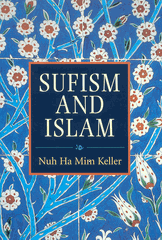
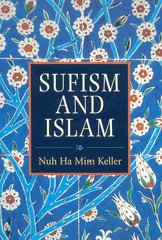
Sufism in Traditional Islamic Sciences, by Nuh Ha Mim Keller

Perhaps the biggest challenge in learning Islam correctly today is the scarcity of traditional scholars. In this meaning, Bukhari relates the sahih, rigorously authenticated hadith that the Prophet (Allah bless him and give him peace) said: "Truly, Allah does not remove Sacred Knowedge by taking it out of servants, but rather by taking back the souls of Islamic scholars [in death], until, when He has not left a single scholar, the people take the ignorant as leaders, who are asked for and who give Islamic legal opinion without knowledge, misguided and misguiding." (Fath al-Bari, 1.194, hadith 100).

The process described by the hadith is not yet completed, but has certainly begun, and in our times, the lack of traditional scholars—whether in Islamic law, in hadith, in tafsir ‘Quranic exegesis’—has given rise to an understanding of the religion that is far from scholarly, and sometimes far from the truth. For example, in the course of my own studies in Islamic law, my first impression from orientalist and Muslim-reformer literature, was that the Imams of the madhhabs or ‘schools of jurisprudence’ had brought a set of rules from completely outside the Islamic tradition and somehow imposed them upon the Muslims. But when I sat with traditional scholars in the Middle East and asked them about the details, I came away with a different point of view, having learned the bases for deriving the law from the Quran and Sunnah.

And similarly with Tasawwuf—which is the word I will use tonight for the English Sufism, since our context is traditional Islam—quite a different picture emerged from talking with scholars of Tasawwuf than what I had been exposed to in the West. My talk tonight, Insyaallah, will present knowledge taken from the Quran and sahih hadith, and from actual teachers of Tasawwuf in Syria and Jordan, in view of the need for all of us to get beyond clichés, the need for factual information from Islamic sources, the need to answer such questions as: Where did Tasawwuf come from? What role does it play in the din or religion of Islam? and most importantly, what is the command of Allah about it?

As for the origin of the term Tasawwuf, like many other Islamic discliplines, its name was not known to the first generation of Muslims. The historian Ibn Khaldun notes in his Muqaddimah:
This knowledge is a branch of the sciences of Sacred Law that originated within the Ummah. From the first, the way of such people had also been considered the path of truth and guidance by the early Muslim community and its notables, of the Companions of the Prophet (Allah bless him and give him peace), those who were taught by them, and those who came after them.

It basically consists of dedication to worship, total dedication to Allah Most High, disregard for the finery and ornament of the world, abstinence from the pleasure, wealth, and prestige sought by most men, and retiring from others to worship alone. This was the general rule among the Companions of the Prophet (Allah bless him and give him peace) and the early Muslims, but when involvement in this-worldly things became widespread from the second Islamic century onwards and people became absorbed in worldliness, those devoted to worship came to be called Sufiyya or People of Tasawwuf (Ibn Khaldun, al-Muqaddima [N.d. Reprint. Mecca: Dar al-Baz, 1397/1978], 467).

In Ibn Khaldun’s words, the content of Tasawwuf, "total dedication to Allah Most High," was, "the general rule among the Companions of the Prophet (Allah bless him and give him peace) and the early Muslims." So if the word did not exist in earliest times, we should not forget that this is also the case with many other Islamic disciplines, such as tafsir, ‘Quranic exegesis’ or ‘ilm al-jarh wa tadil, ‘the science of the positive and negative factors that affect hadith narrators acceptability’ or ilm al-tawhid, 'the science of belief in Islamic tenets of faith' all of which proved to be of the utmost importance to the correct preservation and transmission of the religion.

As for the origin of the word Tasawwuf, it may well be from Sufi, the person who does Tasawwuf, which seems to be etymologically prior to it, for the earliest mention of either term was by Hasan al-Basri who died 110 years after the Hijra, and is reported to have said, "I saw a Sufi circumambulating the Kaaba, and offered him a dirham, but he would not accept it." It therefore seems better to understand Tasawwuf by first asking what a Sufi is; and perhaps the best definition of both the Sufi and his way, certainly one of the most frequently quoted by masters of the discipline, is from the Sunnah of the Prophet (Allah bless him and give him peace) who said: Allah Most High says: "He who is hostile to a friend of Mine I declare war against. My slave approaches Me with nothing more beloved to Me than what I have made obligatory upon him, and My slave keeps drawing nearer to Me with voluntary works until I love him. And when I love him, I am his hearing with which he hears, his sight with which he sees, his hand with which he seizes, and his foot with which he walks. If he asks me, I will surely give to him, and if he seeks refuge in Me, I will surely protect him." (Fath al-Bari, 11.340–41, hadith 6502); This hadith was related by Imam Bukhari, Ahmad ibn Hanbal, al-Bayhaqi, and others with multiple contiguous chains of transmission, and is sahih. It discloses the central reality of Tasawwuf, which is precisely change, while describing the path to this change, in conformity with a traditional definition used by masters in the Middle East, who define a Sufi as Faqihun ‘amila bi ‘ilmihi fa awrathahu Llahu ‘ilma ma lam ya‘lam, ‘A man of religious learning who applied what he knew, so Allah bequeathed him knowledge of what he did not know.’

To clarify, a Sufi is a man of religious learning,because the hadith says, "My slave approaches Me with nothing more beloved to Me than what I have made obligatory upon him," and only through learning can the Sufi know the command of Allah, or what has been made obligatory for him. He has applied what he knew, because the hadith says he not only approaches Allah with the obligatory, but "keeps drawing nearer to Me with voluntary works until I love him." And in turn, Allah bequeathed him knowledge of what he did not know, because the hadith says, "And when I love him, I am his hearing with which he hears, his sight with which he sees, his hand with which he seizes, and his foot with which he walks," which is a metaphor for the consummate awareness of tawhid, or the ‘unity of Allah,’ which in the context of human actions such as hearing, sight, seizing, and walking, consists of realizing the words of the Qur'an about Allah that, "It is He who created you and what you do." (Qur'an 37:96).

The origin of the way of the Sufi thus lies in the Prophetic Sunnah. The sincerity to Allah that it entails was the rule among the earliest Muslims, to whom this was simply a state of being without a name, while it only became a distinct discipline when the majority of the Community had drifted away and changed from this state. Muslims of subsequent generations required systematic effort to attain it, and it was because of the change in the Islamic environment after the earliest generations, that a discipline by the name of Tasawwuf came to exist.

But if this is true of origins, the more significant question is: How central is Tasawwuf to the religion, and: Where does it fit into Islam as a whole? Perhaps the best answer is the hadith of Muslim, that ‘Umar ibn al-Khattab said: As we sat one day with the Messenger of Allah (Allah bless him and give him peace), a man in pure white clothing and jet black hair came to us, without a trace of travelling upon him, though none of us knew him.
He sat down before the Prophet (Allah bless him and give him peace) bracing his knees against his, resting his hands on his legs, and said: "Muhammad, tell me about Islam." The Messenger of Allah (Allah bless him and give him peace) said: "Islam is to testify that there is no god but Allah and that Muhammad is the Messenger of Allah, and to perform the prayer, give zakat, fast in Ramadan, and perform the pilgrimage to the House if you can find a way."
He said: "You have spoken the truth," and we were surprised that he should ask and then confirm the answer. Then he said: "Tell me about true faith (iman)," and the Prophet (Allah bless him and give him peace) answered: "It is to believe in Allah, His angels, His inspired Books, His messengers, the Last Day, and in destiny, its good and evil."
"You have spoken the truth," he said, "Now tell me about the perfection of faith (ihsan)," and the Prophet (Allah bless him and give him peace) answered: "It is to worship Allah as if you see Him, and if you see Him not, He nevertheless sees you."

The hadith continues to where ‘Umar said: Then the visitor left. I waited a long while, and the Prophet (Allah bless him and give him peace) said to me, "Do you know, ‘Umar, who was the questioner?" and I replied, "Allah and His messenger know best." He said, "It was Gabriel, who came to you to teach you your religion" (Sahih Muslim, 1.37: hadith 8).

This is a sahih hadith, described by Imam Nawawi as one of the hadiths upon which the Islamic religion turns. The use of din in the last words of it, Atakum yu‘allimukum dinakum, "came to you to teach you your religion" entails that the religion of Islam is composed of the three fundamentals mentioned in the hadith: Islam, or external compliance with what Allah asks of us; Iman, or the belief in the unseen that the prophets have informed us of; and Ihsan, or to worship Allah as though one sees Him.

The Quran says, in Surat Maryam, "Surely We have revealed the Remembrance, and surely We shall preserve it" (Qur'an 15:9), and if we reflect how Allah, in His wisdom, has accomplished this, we see that it is by human beings, the traditional scholars He has sent at each level of the religion. The level of Islam has been preserved and conveyed to us by the Imams of Syariah or ‘Sacred Law’ and its ancillary disciplines; the level of Iman, by the Imams of Aqidah or ‘tenets of faith’; and the level of Ihsan, "to worship Allah as though you see Him," by the Imams of Tasawwuf.

The hadith’s very words "to worship Allah" show us the interrelation of these three fundamentals, for the how of "worship" is only known through the external prescriptions of Islam, while the validity of this worship in turn presupposes Iman or faith in Allah and the Islamic revelation, without which worship would be but empty motions; while the words, "as if you see Him," show that Ihsan implies a human change, for it entails the experience of what, for most of us, is not experienced. So to understand Tasawwuf, we must look at the nature of this change in relation to both Islam and Iman, and this is the main focus of my talk tonight.

At the level of Islam, we said that Tasawwuf requires Islam, through ‘submission to the rules of Sacred Law’. But Islam, for its part, equally requires Tasawwuf. Why? For the very good reason that the Sunnah which Muslims have been commanded to follow is not just the words and actions of the Prophet (Allah bless him and give him peace), but also his states, states of the heart such as taqwa ‘godfearingness', ikhlas ‘sincerity,’ tawakkul ‘reliance on Allah,’ rahmah ‘mercy,’ tawadu ‘humility,’ and so on.

Now, it is characteristic of the Islamic ethic that human actions are not simply divided into two shades of morality, right or wrong; but rather five, arranged in order of their consequences in the next world. The obligatory (wajib) is that whose performance is rewarded by Allah in the next life and whose nonperformance is punished. The recommended (mandub) is that whose performance is rewarded, but whose nonperformance is not punished. The permissible (mubah) is indifferent, unconnected with either reward or punishment. The offensive (makruh) is that whose nonperformance is rewarded but whose performance is not punished. The unlawful (haram) is that whose nonperformance is rewarded and whose performance is punished, if one dies unrepentant.

Human states of the heart, the Quran and Sunnah make plain to us, come under each of these headings. Yet they are not dealt with in books of fiqh or ‘Islamic jurisprudence’ because unlike the prayer, zakat, or fasting, they are not quantifiable in terms of the specific amount of them that must be done. But though they are not countable, they are of the utmost importance to every Muslim. Let’s look at a few examples.
(1) Love of Allah. In Surat al-Baqarah of the Quran, Allah blames those who ascribe associates to Allah whom they love as much as they love Allah. Then He says,
"And those who believe are greater in love for Allah" (Qur'an 2:165), making being a believer conditional upon having greater love for Allah than any other.
(2) Mercy. Bukhari and Muslim relate that the Prophet (Allah bless him and give him peace) said, "Whomever is not merciful to people, Allah will show no mercy" (Sahih Muslim, 4.1809: hadith 2319), and Tirmidhi relates the well authenticated (hasan) hadith "Mercy is not taken out of anyone except the damned" (al-Jami al-sahih, 4.323: hadith 1923).
(3) Love of each other. Muslim relates in his Sahih that the Prophet (Allah bless him and give him peace) said, "By Him in whose hand is my soul, none of you shall enter paradise until you believe, and none of you shall believe until you love one another . . . " (Sahih Muslim, 1.74: hadith 54).
(4) Presence of mind in the prayer (salat). Abu Dawud relates in his Sunan that Ammar ibn Yasir heard the Prophet (Allah bless him and give him peace) say, "Truly, a man leaves, and none of his prayer has been recorded for him except a tenth of it, a ninth of it, eighth of it, seventh of it, sixth of it, fifth of it, fourth of it, third of it, a half of it" (Sunan Abi Dawud, 1.211: hadith 796)—meaning that none of a person’s prayer counts for him except that in which he is present in his heart with Allah.
(5) Love of the Prophet. Bukhari relates in his Sahih that the Prophet (Allah bless him and give him peace) said, "None of you believes until I am more beloved to him than his father, his son, and all people" (Fath al-Bari, 1.58, hadith 15).

It is plain from these texts that none of the states mentioned—whether mercy, love, or presence of heart—are quantifiable, for the Syariah cannot specify that one must "do two units of mercy" or "have three units of presence of mind" in the way that the number of rakaahs of prayer can be specified, yet each of them is personally obligatory for the Muslim. Let us complete the picture by looking at a few examples of states that are haram or ‘strictly unlawful’:
(1) Fear of anyone besides Allah. Allah Most High says in Surat al-Baqara of the Qur'an,
"And fulfill My covenant: I will fulfill your covenant—And fear Me alone" (Quran 2:40), the last phrase of which, according to Imam Fakhr al-Din al-Razi, "establishes that a human being is obliged to fear no one besides Allah Most High" (Tafsir al-Fakhr al-Razi, 3.42).
(2) Despair. Allah Most High says,
"None despairs of Allah’s mercy except the people who disbelieve" (Quran 12:87), indicating the unlawfulness of this inward state by coupling it with the worst human condition possible, that of unbelief.
(3) Arrogance. Muslim relates in his Sahih that the Prophet (Allah bless him and give him peace) said, "No one shall enter paradise who has a particle of arrogance in his heart" (Sahih Muslim, 1.93: hadith 91).
(4) Envy, meaning to wish for another to lose the blessings he enjoys. Abu Dawud relates that the Prophet (Allah bless him and give him peace) said, "Beware of envy, for envy consumes good works as flames consume firewood" (Sunan Abi Dawud, 4.276: hadith 4903).
(5) Showing off in acts of worship. Al-Hakim relates with a sahih chain of transmission that the Prophet (Allah bless him and give him peace) said, "The slightest bit of showing off in good works is as if worshipping others with Allah . . . ." (al-Mustadrak ‘ala al-Sahihayn, 1.4).
These and similar haram inward states are not found in books of fiqh or ‘jurisprudence,’ because fiqh can only deal with quantifiable descriptions of rulings. Rather, they are examined in their causes and remedies by the scholars of the ‘inner fiqh’ of Tasawwuf, men such as Imam al-Ghazali in his Ihya’ ‘ulum al-din [The reviving of the religious sciences], Imam al-Rabbani in his Maktubat [Letters], al-Suhrawardi in his ‘Awarif al-Ma‘arif [The knowledges of the illuminates], Abu Talib al-Makki in Qut al-qulub [The sustenance of hearts], and similar classic works, which discuss and solve hundreds of ethical questions about the inner life. These are books of Syariah and their questions are questions of Sacred Law, of how it is lawful or unlawful for a Muslim to be; and they preserve the part of the prophetic sunna dealing with states.

Who needs such information? All Muslims, for the Quranic verses and authenticated hadiths all point to the fact that a Muslim must not only do certain things and say certain things, but also must be something, must attain certain states of the heart and eliminate others. Do we ever fear someone besides Allah? Do we have a particle of arrogance in our hearts? Is our love for the Prophet (Allah bless him and give him peace) greater than our love for any other human being? Is there the slightest bit of showing off in our good works?

Half a minute’s reflection will show the Muslim where he stands on these aspects of his din, and why in classical times, helping Muslims to attain these states was not left to amateurs, but rather delegated to ulama of the heart, the scholars of Islamic Tasawwuf. For most people, these are not easy transformations to make, because of the force of habit, because of the subtlety with which we can deceive ourselves, but most of all because each of us has an ego, the self, the Me, which is called in Arabic al-nafs, about which Allah testifies in Surat Yusuf:
"Verily the self ever commands to do evil" (Qur'an 12:53).

If you do not believe it, consider the hadith related by Muslim in his Sahih, that:
The first person judged on Resurrection Day will be a man martyred in battle.
He will be brought forth, Allah will reacquaint him with His blessings upon him and the man will acknowledge them, whereupon Allah will say, "What have you done with them?" to which the man will respond, "I fought to the death for You."
Allah will reply, "You lie. You fought in order to be called a hero, and it has already been said." Then he will be sentenced and dragged away on his face and flung into the fire.
Then a man will be brought forward who learned Sacred Knowledge, taught it to others, and who recited the Quran. Allah will remind him of His gifts to him and the man will acknowledge them, and then Allah will say, "What have you done with them?" The man will answer, "I acquired Sacred Knowledge, taught it, and recited the Qur'an, for Your sake."
Allah will say, "You lie. You learned so as to be called a scholar, and read the Quran so as to be called a reciter, and it has already been said." Then the man will be sentenced and dragged away on his face to be flung into the fire.
Then a man will be brought forward whom Allah generously provided for, giving him various kinds of wealth, and Allah will recall to him the benefits given, and the man will acknowledge them, to which Allah will say, "And what have you done with them?" The man will answer, "I have not left a single kind of expenditure You love to see made, except that I have spent on it for Your sake."
Allah will say, "You lie. You did it so as to be called generous, and it has already been said." Then he will be sentenced and dragged away on his face to be flung into the fire (Sahih Muslim, 3.1514: hadith 1905).

We should not fool ourselves about this, because our fate depends on it: in our childhood, our parents taught us how to behave through praise or blame, and for most of us, this permeated and colored our whole motivation for doing things. But when childhood ends, and we come of age in Islam, the religion makes it clear to us, both by the above hadith and by the words of the Prophet (Allah bless him and give him peace) "The slightest bit of showing off in good works is as if worshipping others with Allah" that being motivated by what others think is no longer good enough, and that we must change our motives entirely, and henceforth be motivated by nothing but desire for Allah Himself. The Islamic revelation thus tells the Muslim that it is obligatory to break his habits of thinking and motivation, but it does not tell him how. For that, he must go to the scholars of these states, in accordance with the Qur'anic imperative,
"Ask those who know if you know not." (Qur'an 16:43)

There is no doubt that bringing about this change, purifying the Muslims by bringing them to spiritual sincerity, was one of the central duties of the Prophet Muhammad (Allah bless him and give him peace), for Allah says in the Surat Al ‘Imran of the Quran,
"Allah has truly blessed the believers, for He has sent them a messenger of themselves, who recites His signs to them and purifies them, and teaches them the Book and the Wisdom" (Quran 3:164), which explicitly lists four tasks of the prophetic mission, the second of which, yuzakkihim means precisely to ‘purify them’ and has no other lexical sense. Now, it is plain that this teaching function cannot, as part of an eternal revelation, have ended with the passing of the first generation, a fact that Allah explictly confirms in His injunction in Surat Luqman, "And follow the path of him who turns unto Me" (Quran 31:15).

These verses indicate the teaching and transformative role of those who convey the Islamic revelation to Muslims, and the choice of the word ittiba‘ in the second verse, which is more general, implies both keeping the company of and following the example of a teacher. This is why in the history of Tasawwuf, we find that though there were many methods and schools of thought, these two things never changed: keeping the company of a teacher, and following his example—in exactly the same way that the Sahaba were uplifted and purified by keeping the company of the Prophet (Allah bless him and give him peace) and following his example.

And this is why the discipline of Tasawwuf has been preserved and transmitted by Tariqahs or groups of students under a particular master. First, because this was the Sunnah of the Prophet (Allah bless him and give him peace) in his purifying function described by the Quran. Secondly, Islamic knowledge has never been transmitted by writings alone, but rather from ulama to students. Thirdly, the nature of the knowledge in question is of hal or ‘state of being,’ not just knowing, and hence requires it be taken from a succession of living masters back to the Prophet (Allah bless him and give him peace), for the sheer range and number of the states of heart required by the revelation effectively make imitation of the personal example of a teacher the only effective means of transmission.

So far we have spoken about Tasawwuf in respect to Islam, as a Syariah science necessary to fully realize the Sacred Law in one’s life, to attain the states of the heart demanded by the Quran and hadith. This close connection between Syariah and Tasawwuf is expressed by the statement of Imam Malik, founder of the Maliki school, that "he who practices Tasawwuf without learning Sacred Law corrupts his faith, while he who learns Sacred Law without practicing Tasawwuf corrupts himself. Only he who combines the two proves true." This is why Tasawwuf was taught as part of the traditional curriculum in madrasas across the Muslim world from Malaysia to Morocco, why many of the greatest Syariah scholars of this Ummah have been Sufis, and why until the end of the Islamic caliphate at the beginning of this century and the subsequent Western control and cultural dominance of Muslim lands, there were teachers of Tasawwuf in Islamic institutions of higher learning from Lucknow to Istanbul to Cairo.
But there is a second aspect of Tasawwuf that we have not yet talked about; namely, its relation to Iman or ‘True Faith,’ the second pillar of the Islamic religion, which in the context of the Islamic sciences consists of ‘Aqidah or ‘orthodox belief.’

All Muslims believe in Allah, and that He is transcendently beyond anything conceivable to the minds of men, for the human intellect is imprisoned within its own sense impressions and the categories of thought derived from them, such as number, directionality, spatial extention, place, time, and so forth. Allah is beyond all of that; in His own words, "There is nothing whatesover like unto Him." (Qur'an 42:11)

If we reflect for a moment on this verse, in the light of the hadith of Muslim about Ihsan that "it is to worship Allah as though you see Him," we realize that the means of seeing here is not the eye, which can only behold physical things like itself; nor yet the mind, which cannot transcend its own impressions to reach the Divine, but rather certitude, the light of Iman, whose locus is not the eye or the brain, but rather the ruh, a subtle faculty Allah has created within each of us called the soul, whose knowledge is unobstructed by the bounds of the created universe. Allah Most High says, by way of exalting the nature of this faculty by leaving it a mystery,
"Say: ‘The soul is of the affair of my Lord’" (Qur'an 17:85).

The food of this ruh is dhikr or the ‘remembrance of Allah.’ Why? Because acts of obedience increase the light of certainty and Iman in the soul, and dhikr is among the greatest of them, as is attested to by the sahih hadith related by al-Hakim that the Prophet (Allah bless him and give him peace) said, "Shall I not tell you of the best of your works, the purest of them in the eyes of your Master, the highest in raising your rank, better than giving gold and silver, and better for you than to meet your enemy and smite their necks, and they smite yours?" They said, "This—what is it, O Messenger of Allah?" and he said: Dhikru Llahi ‘azza wa jall, "The remembrance of Allah Mighty and Majestic." (al-Mustadrak ‘ala al-Sahihayn, 1.496).

Increasing the strength of Iman through good actions, and particularly through the medium of dhikr has tremendous implications for the Islamic religion and traditional spirituality. A non-Muslim once asked me, "If God exists, then why all this beating around the bush? Why doesn’t He just come out and say so?"

The answer is that taklif or ‘moral responsibility’ in this life is not only concerned with outward actions, but with what we believe, our ‘Aqida—and the strength with which we believe it. If belief in God and other eternal truths were effortless in this world, there would be no point in Allah making us responsible for it, it would be automatic, involuntary, like our belief, say, that London is in England. There would no point in making someone responsible for something impossible not to believe.

But the responsibility Allah has place upon us is belief in the Unseen, as a test for us in this world to choose between kufr and Iman, to distinguish believer from unbeliever, and some believers above others.

This why strengthening Iman through dhikr is of such methodological importance for Tasawwuf: we have not only been commanded as Muslims to believe in certain things, but have been commanded to have absolute certainty in them. The world we see around us is composed of veils of light and darkness: events come that knock the Iman out of some of us, and Allah tests each of us as to the degree of certainty with which we believe the eternal truths of the religion. It was in this sense that ‘Umar ibn al-Khattab said, "If the Iman of Abu Bakr were weighed against the Iman of the entire Umma, it would outweigh it."

Now, in traditional Aqidah one of the most important tenets is the wahdaniyyah or ‘oneness and uniqueness’ of Allah Most High. This means He is without any syirk or associate in His being, in His attributes, or in His acts. But the ability to hold this insight in mind in the rough and tumble of daily life is a function of the strength of certainty (yaqin) in one’s heart. Allah tells the Prophet (Allah bless him and give him peace) in Surat al-A‘raf of the Quran, "Say: ‘I do not possess benefit for myself or harm, except as Allah wills’" (Qur'an 7:188), yet we tend to rely on ourselves and our plans, in obliviousness to the facts of Aqidah that ourselves and our plans have no effect, that Allah alone brings about effects.

If you want to test yourself on this, the next time you contact someone with good connections whose help is critical to you, take a look at your heart at the moment you ask him to put in a good word for you with someone, and see whom you are relying upon. If you are like most of us, Allah is not at the forefront of your thoughts, despite the fact that He alone is controlling the outcome. Isn’t this a lapse in your Aqidah, or, at the very least, in your certainty?

Tasawwuf corrects such shortcomings by step-by-step increasing the Muslim’s certainty in Allah. The two central means of Tasawwuf in attaining the conviction demanded by ‘Aqida are mudhakara, or learning the traditional tenets of Islamic faith, and dhikr, deepening one’s certainty in them by remembrance of Allah. It is part of our faith that, in the words of the Qur'an in Surat al-Saffat, "Allah has created you and what you do" (Qur'an 37:96);
yet for how many of us is this day to day experience? Because Tasawwuf remedies this and other shortcomings of Iman, by increasing the Muslim’s certainty through a systematic way of teaching and dhikr, it has traditionally been regarded as personally obligatory to this pillar of the religion also, and from the earliest centuries of Islam, has proved its worth.

The last question we will deal with tonight is: What about the bad Sufis we read about, who contravene the teachings of Islam?

The answer is that there are two meanings of Sufi: the first is "Anyone who considers himself a Sufi," which is the rule of thumb of orientalist historians of Sufism and popular writers, who would oppose the "Sufis" to the "Ulama." I think the Quranic verses and hadiths we have mentioned tonight about the scope and method of true Tasawwuf show why we must insist on the primacy of the definition of a Sufi as "a man of religious learning who applied what he knew, so Allah bequeathed him knowledge of what he did not know."

The very first thing a Sufi, as a man of religious learning knows is that the Shari‘a and ‘Aqida of Islam are above every human being. Whoever does not know this will never be a Sufi, except in the orientalist sense of the word—like someone standing in front of the stock exchange in an expensive suit with a briefcase to convince people he is a stockbroker. A real stockbroker is something else.

Because this distinction is ignored today by otherwise well-meaning Muslims, it is often forgotten that the ulama who have criticized Sufis, such as Ibn al-Jawzi in his Talbis Iblis [The Devil’s deception], or Ibn Taymiyyah in places in his Fatawa, or Ibn al-Qayyim al-Jawziyyah, were not criticizing Tasawwuf as an ancillary discipline to the Syariah. The proof of this is Ibn al-Jawzi’s five-volume Sifat al-safwa, which contains the biographies of the very same Sufis mentioned in al-Qushayri’s famous Tasawwuf manual al-Risalah al-Qushayriyyah. Ibn Taymiyyah considered himself a Sufi of the Qadiri order, and volumes ten and eleven of his thirty-seven-volume Majmu‘ al-fatawa are devoted to Tasawwuf. And Ibn al-Qayyim al-Jawziyyah wrote his three-volume Madarij al-salikin, a detailed commentary on ‘Abdullah al-Ansari al-Harawi’s tract on the spiritual stations of the Sufi path, Manazil al-sa’irin. These works show that their authors’ criticisms were not directed at Tasawwuf as such, but rather at specific groups of their times, and they should be understood for what they are.

As in other Islamic sciences, mistakes historically did occur in Tasawwuf, most of them stemming from not recognizing the primacy of Syariah and Aqidah above all else. But these mistakes were not different in principle from, for example, the Isra’iliyyat (baseless tales of Bani Isra’il) that crept into tafsir literature, or the mawdu‘at (hadith forgeries) that crept into the hadith. These were not taken as proof that tafsir was bad, or hadith was deviance, but rather, in each discipline, the errors were identified and warned against by Imams of the field, because the Ummah needed the rest. And such corrections are precisely what we find in books like Qushayri’s Risalah, Ghazali’s Ihya’ and other works of Sufism.

For all of the reasons we have mentioned, Tasawwuf was accepted as an essential part of the Islamic religion by the ulama of this Ummah. The proof of this is all the famous scholars of Syariah sciences who had the higher education of Tasawwuf, among them Ibn ‘Abidin, al-Razi, Ahmad Sirhindi, Zakariyya al-Ansari, al-‘Izz ibn ‘Abd al-Salam, Ibn Daqiq al-‘Eid, Ibn Hajar al-Haytami, Shah Wali Allah, Ahmad Dardir, Ibrahim al-Bajuri, ‘Abd al-Ghani al-Nabulsi, Imam al-Nawawi, Taqi al-Din al-Subki, and al-Suyuti.

Among the Sufis who aided Islam with the sword as well as the pen, to quote Reliance of the Traveller, were: such men as the Naqshbandi sheikh Shamil al-Daghestani, who fought a prolonged war against the Russians in the Caucasus in the nineteenth century; Sayyid Muhammad ‘Abdullah al-Somali, a sheikh of the Salihiyya order who led Muslims against the British and Italians in Somalia from 1899 to 1920; the Qadiri sheikh ‘Uthman ibn Fodi, who led jihad in Northern Nigeria from 1804 to 1808 to establish Islamic rule; the Qadiri sheikh ‘Abd al-Qadir al-Jaza’iri, who led the Algerians against the French from 1832 to 1847; the Darqawi faqir al-Hajj Muhammad al-Ahrash, who fought the French in Egypt in 1799; the Tijani sheikh al-Hajj ‘Umar Tal, who led Islamic Jihad in Guinea, Senegal, and Mali from 1852 to 1864; and the Qadiri sheikh Ma’ al-‘Aynayn al-Qalqami, who helped marshal Muslim resistance to the French in northern Mauritania and southern Morocco from 1905 to 1909.

Among the Sufis whose missionary work Islamized entire regions are such men as the founder of the Sanusiyya order, Muhammad ‘Ali Sanusi, whose efforts and jihad from 1807 to 1859 consolidated Islam as the religion of peoples from the Libyan Desert to sub-Saharan Africa; [and] the Shadhili sheikh Muhammad Ma‘ruf and Qadiri sheikh Uways al-Barawi, whose efforts spread Islam westward and inland from the East African Coast . . . (Reliance of the Traveller,863).

It is plain from the examples of such men what kind of Muslims have been Sufis; namely, all kinds, right across the board—and that Tasawwuf did not prevent them from serving Islam in any way they could.

To summarize everything I have said tonight: In looking first at Tasawwuf and Syariah, we found that many Quranic verses and sahih hadiths oblige the Muslim to eliminate haram inner states as arrogance, envy, and fear of anyone besides Allah; and on the other hand, to acquire such obligatory inner states as mercy, love of one’s fellow Muslims, presence of mind in prayer, and love of the Prophet (Allah bless him and give him peace). We found that these inward states could not be dealt with in books of fiqh, whose purpose is to specify the outward, quantifiable aspects of the Syariah. The knowledge of these states is nevertheless of the utmost importance to every Muslim, and this is why it was studied under the ulama of Ihsan, the teachers of Tasawwuf, in all periods of Islamic history until the beginning of the present century.

We then turned to the level of Iman, and found that though the Aqidah of Muslims is that Allah alone has any effect in this world, keeping this in mind in everhday life is not a given of human consciousness, but rather a function of a Muslim’s yaqin, his certainty. And we found that Tasawwuf, as an ancillary discipline to Aqidah, emphasizes the systematic increase of this certainty through both mudhakarah, ‘teaching tenets of faith’ and dhikr, ‘the remembrance of Allah,’ in accordance with the words of the Prophet (Allah bless him and give him peace) about Ihsan that "it is worship Allah as though you see Him."

Lastly, we found that accusations against Tasawwuf made by scholars such as Ibn al-Jawzi, and Ibn Taymiyyah were not directed against Tasawwuf in principle, but to specific groups and individuals in the times of these authors, the proof for which is the other books by the same authors that showed their understanding of Tasawwuf as a Syariah science.

To return to the starting point of my talk this evening, with the disappearance of traditional Islamic scholars from the Ummah, two very different pictures of Tasawwuf emerge today. If we read books written after the dismantling of the traditional fabric of Islam by colonial powers in the last century, we find the big hoax: Islam without spirituality and Syariah without Tasawwuf. But if we read the classical works of Islamic scholarship, we learn that Tasawwuf has been a Syariah science like tafsir, hadith, or any other, throughout the history of Islam. The Prophet (Allah bless him and give him peace) said, "Truly, Allah does not look at your outward forms and wealth, but rather at your hearts and your works" (Sahih Muslim, 4.1389: hadith 2564).

And this is the brightest hope that Islam can offer a modern world darkened by materialism and nihilism: Islam as it truly is; the hope of eternal salvation through a religion of brotherhood and social and economic justice outwardly, and the direct experience of divine love and illumination inwardly.